Nicaragua Exports 2026: A Showcase of the Country's Quality and Export Potential
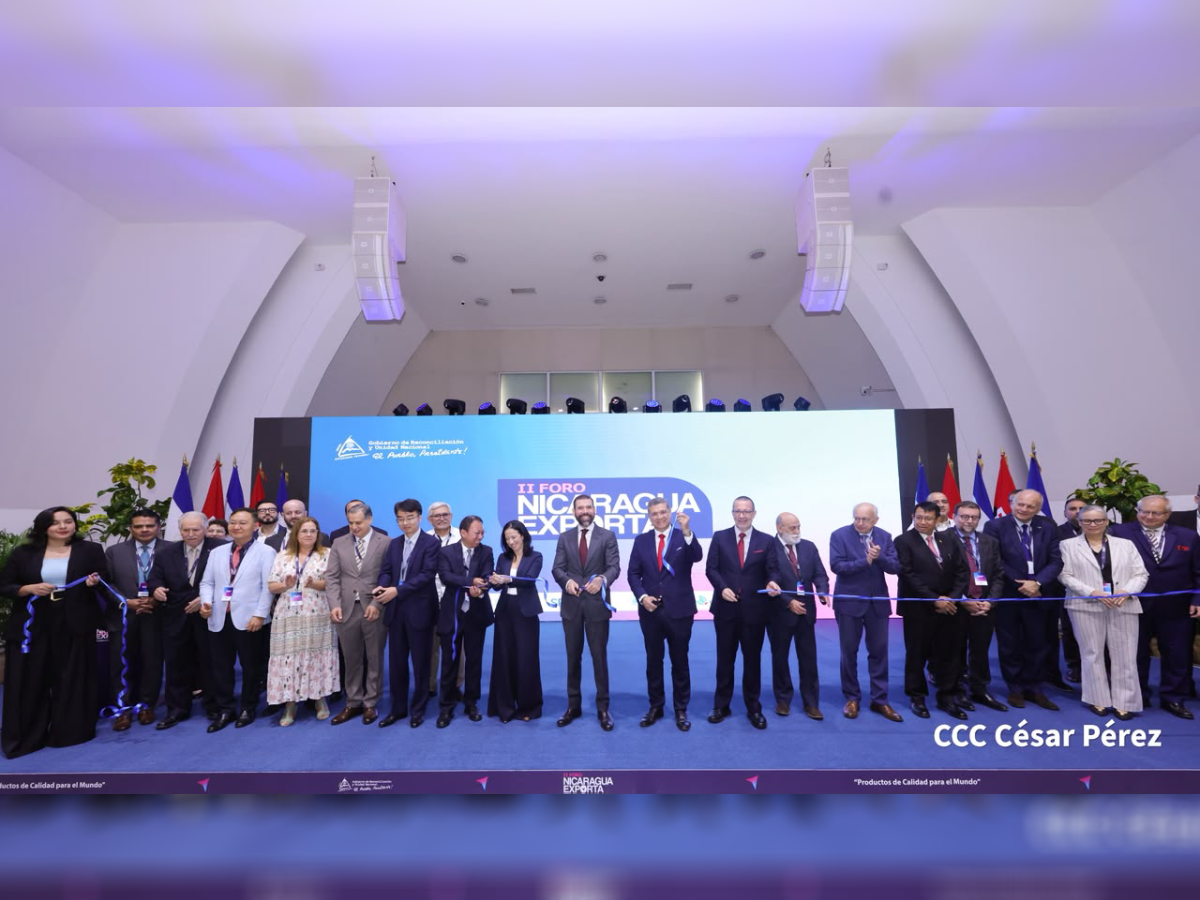
The Nicaragua Exports 2026 Forum saw an 80% increase in participation and 30% more commercial exhibitors compared to the previous edition. Cristhofer Gutiérrez, Director General of Export Promotion at the Ministry of Development, Industry and Commerce (MIFIC), highlighted the greater diversity of products and sectors represented in the national export offering.
During an interview on the program "En Vivo" on Channel 4, Gutiérrez stated that this event promoted the quality of Nicaraguan products, facilitated trade, and strengthened companies' ability to access new international markets.
"The forum not only became a platform for development and promotion, but also a commercial showcase for the world to see the quality of the products and services that our country offers," he said.
The official noted that Nicaragua Exports 2026 also addressed topics related to strengthening the technical capabilities of stakeholders involved in foreign trade, supply chains, intellectual property, investment, market diversification, and value addition.
The presentations and workshops featured national and international speakers and panelists, as well as representatives from organizations such as the Secretariat for Central American Economic Integration (SIECA) and the International Regional Organization for Agricultural Health (OIRSA).
Gutiérrez explained that these topics contribute to improving the competitiveness of Nicaraguan companies and identifying opportunities to expand the presence of their products abroad.
"These are elements we have been working on in recent years, and they provide that added value, that differentiation, that reason why international buyers, among the wide range of products offered by different countries around the world, choose Nicaragua," he stated.
Exporter Award Recognizes Business Effort
Regarding the Exporter Award, Gutiérrez explained that this initiative recognizes the efforts of producers, cooperatives, and companies that bring national products to international markets.
"This is an important initiative of our Government to recognize the export culture of these producers, cooperatives, and companies, who strive to bring the quality of our products to international markets and raise the profile of our country," he stated.
This year, 25 companies from different productive sectors participated. The process included three participation categories and four phases: launch, registration, evaluation, and awards ceremony.
The evaluation criteria considered export experience, growth in export volume and value, diversification of destination markets, utilization of preferential markets, job creation, value addition, innovation, use of intellectual property assets, and corporate social responsibility.
"It was the evaluation of the sum of all these criteria that allowed us to identify the winning companies of the Exporter Award," he explained.
The competition brought together representatives from sectors such as automotive wiring harnesses, clothing, beef, sugar, peanut and palm oils, coffee, tobacco, cigars, cigarettes, candles, and fish and aquaculture products, including lobster, shrimp, and fish.
Companies dedicated to the production of processed foods, such as pasteurized crab meat and coffee-based preparations, also participated.
The MIFIC official indicated that the agro-industrial, forestry, manufacturing, and fisheries/aquaculture sectors were represented, as well as companies operating under free trade zone, inward processing, and general regimes.
Market Diversification and Added Value
Gutiérrez acknowledged that market diversification presents a challenge for exporting companies, especially when they already have established buyers in certain countries.
However, he pointed out that seeking new markets allows them to reduce dependence on a single market and expand growth opportunities.
"It's a challenge for companies, but these are challenges that are met with commitment and conviction. In that sense, it's the company's interest to continue growing, to continue strengthening, to not put all our eggs in one basket, but rather to diversify in terms of destination markets and products," he explained.
In this process, he highlighted the support of government institutions and the role of Nicaragua Exporta as a platform to promote exports and provide tools to companies.
He also emphasized the importance of traceability and certifications to guarantee the safety of Nicaraguan products, particularly food intended for human consumption.
"The support provided by our various institutions within the National System of Production, Consumption, and Trade is key, including IPSA, of course, as the guarantor of the safety of Nicaraguan products," he noted.
He added that good agricultural practices, good manufacturing practices, organic production certifications, and fair trade add value to products and allow them to be differentiated in international markets.
Exporting companies generate jobs.
The official also highlighted that the quality and recognition of national products can facilitate access to better prices and strengthen companies' presence in international markets.
As an example, he mentioned coffee, whose quality attributes can enhance its positioning and commercial opportunities.
"When coffee has certain attributes and is recognized for its quality, it allows access to better prices. So, you have a quality product, and the product will have guaranteed demand," he stated.
For Gutiérrez, the growth of exporting companies helps maintain their operations, expand their activities, and generate job opportunities.
Finally, he affirmed that strengthening exports has effects on the country's economic and social development, due to its contribution to job creation and the well-being of Nicaraguan families.
Source: 19 Digital