Nicaraguan Economy Grows 4.9% in 2025 Amid Global Challenges
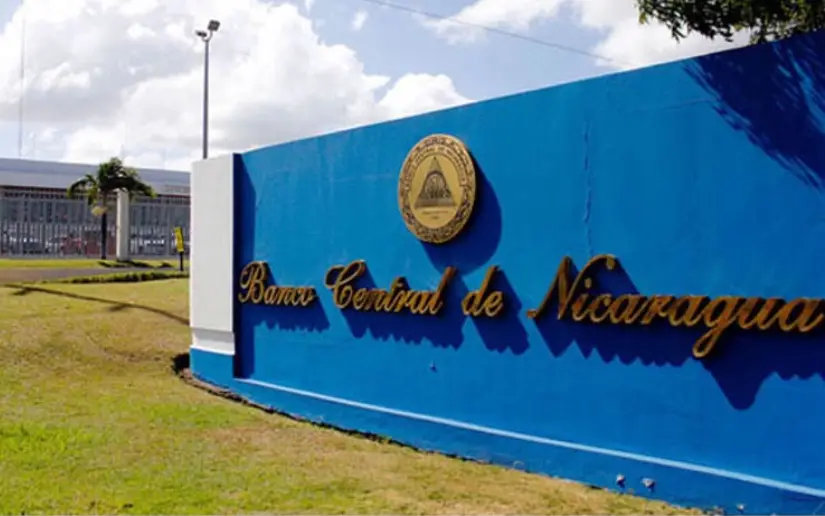
Central Bank President Ovidio Reyes stated that “2025 was an excellent year for the Nicaraguan economy,” presenting a summary of the country's economic performance in a complex international environment, highlighting that the economy grew by 4.9%.
He shared these statements on the Canal 4 program "Revista en Vivo," where he noted that “the global scenario was somewhat mixed,” explaining that while global inflation slowed, “economies didn't fully recover and global conflicts dominated the agenda,” especially due to the implementation of tariffs and the emergence of a trade war.
Despite this environment, he indicated that Nicaragua maintained its initial growth projections of between 3.5% and 4.5%, although subsequently “the economy rebounded.”
He explained that “after the second half of the year, construction, both public and private, began to gain significant momentum,” allowing the country to close the year with 4.9% growth, close to the 5% target.
“This is noteworthy because the rest of the countries in the region experienced less growth,” he added, pointing out that the regional average was between 3.5% and 4%.
He detailed that construction was one of the main drivers, with 17% growth, accompanied by a 21% increase in total investment.
He also specified that “exports grew by 5.8% in real terms,” while trade grew by 9.3% and hotels and restaurants by 8%.
In this regard, he highlighted the role of domestic consumption: “Domestic consumers filled the gaps previously occupied by foreign tourists, and that is positive because it demonstrates well-being, progress, and confidence among the population.”
He also mentioned the growth of other sectors such as mining and quarrying (7.4%), livestock (6.3%), and manufacturing and telecommunications (5%). Although he acknowledged that some activities faced difficulties, such as fishing and shrimp farming due to unfavorable prices, he stated that “the rest of the overall economic activity, across all sectors, is expanding.”
Regarding exports, he emphasized that the country managed to overcome the challenges stemming from tariffs. “Our exports grew, they didn't decrease,” he affirmed, noting that “a record $8.9 billion in exported goods” was reached. He explained that this performance was driven by gold, coffee, and livestock. Regarding gold, he indicated: “More than $5,000 is being paid per troy ounce,” which allowed for the generation of more than $1.9 billion in exports.
As for coffee, he underscored its strategic importance. “In coffee, exports exceeded $900 million,” he detailed, specifying that the figure rose from approximately $524 million in 2024 to over $918.4 million. “That represents a 75% increase in value,” he explained, adding that there was also an increase in volume: “In volume, coffee exports increased from 3,099,000 quintals to 3,370,000 quintals.” He also highlighted the role of the international price: “The average price of coffee in 2023 was $195, and in 2025 it was $272.”
"Livestock farming also experienced significant growth, with exports exceeding $900 million, followed by other economic sectors: sugar, peanuts, and a great deal of activity destined for international markets," he emphasized.
Regarding markets, he affirmed that the United States remains an important partner for Nicaragua: "Historically, it has been the primary export route for our products," along with Central America, which accounts for approximately 24% of trade. He also mentioned Europe as a key destination, especially for coffee. "Forty-two percent of the coffee we produce goes to Europe; it is the leading consumer of coffee if we look at it by region," he stated.
He highlighted the importance of China. "China represents an opportunity; it is a large economy that can absorb resources and provide resources, in both directions," he said.
In the labor market, he emphasized the positive results stemming from growth. "Out of every 100 Nicaraguans, 97 were employed," he stated. He said this demonstrates the economy's capacity to generate enough activity for families to find employment.
He also highlighted price stability: "Last year we reached 2.7% inflation, and we expect it to remain there," he stated.
According to the president of the Central Bank of Nicaragua (BCN), this is due to the policies implemented by the Sandinista government in both fiscal and monetary matters, ensuring the security and stability of the national currency.
Finally, he addressed the outlook for 2026, noting that "we are seeing a repeat of the growth we observed last year in this first quarter," projecting growth between 4% and 5%. However, he warned about international risks such as rising oil prices "due to the geopolitical situation in Asia, which could change the global landscape." He assured that the country has the strengths to face these risks. "We currently have sufficient savings to cope with international events," he affirmed.
Reyes concluded by emphasizing the national economy's capacity to adapt. “It’s a very strong economy that recovers quickly when something happens,” he said, noting that the country maintains stability, productive dynamism, and favorable prospects for Nicaraguan families.